
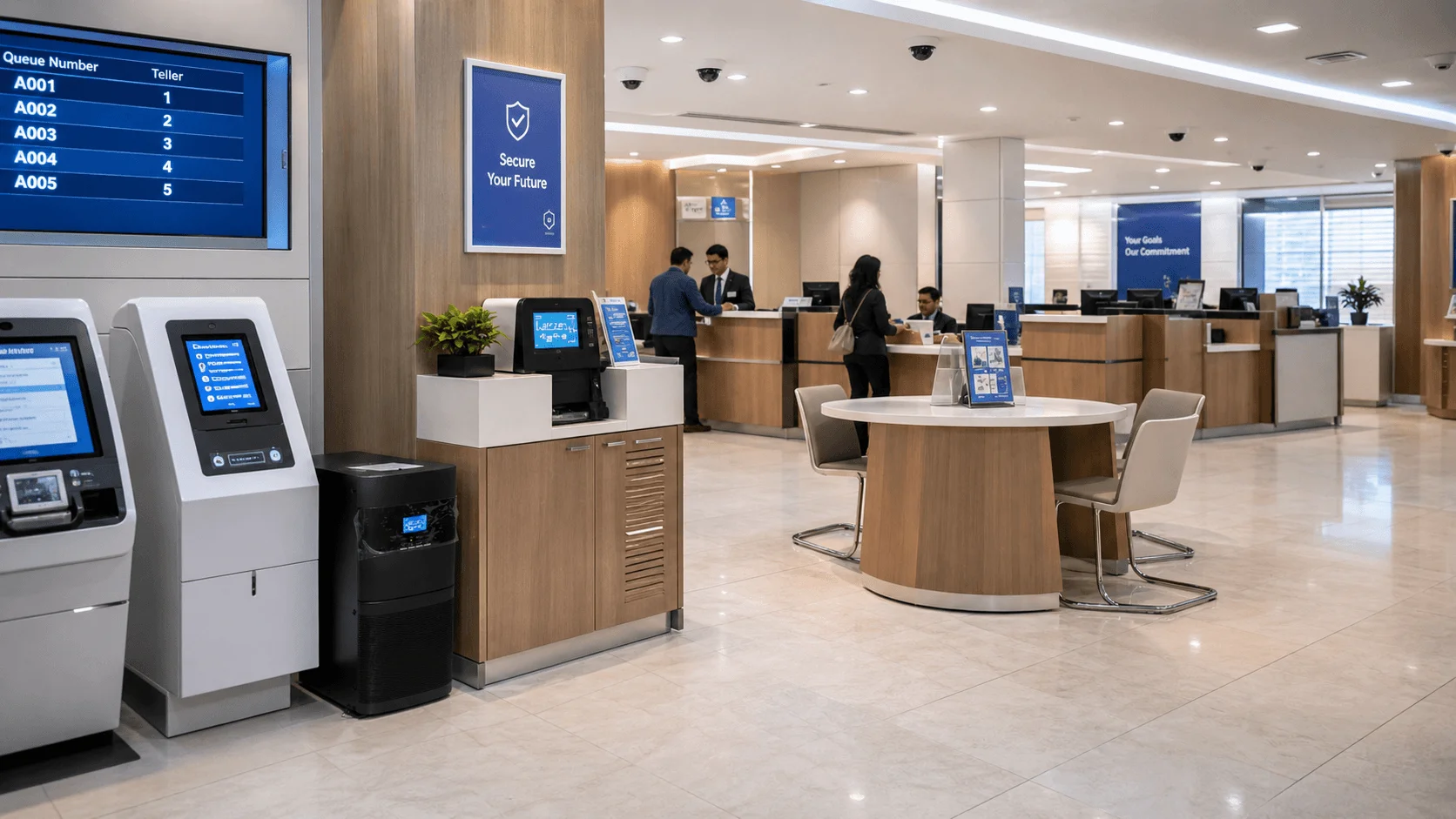
In the financial industry, power continuity is directly connected to transaction security, customer trust, data integrity, business continuity, and operational resilience. Banks, payment service providers, trading firms, insurance companies, ATM networks, fintech platforms, credit institutions, and financial data centers depend on reliable power to process transactions, manage customer accounts, support digital banking, monitor risk, and maintain real-time communication.
A sudden power outage, voltage fluctuation, surge, or unstable power supply can interrupt payment processing, stop ATM services, disconnect branch systems, affect trading operations, damage IT equipment, and increase the risk of data loss. For financial institutions, even a short interruption may create financial losses, customer complaints, operational delays, and reputational damage.
A financial UPS system, or Uninterruptible Power Supply for financial institutions, provides immediate backup power and power protection for critical financial equipment and IT infrastructure. It helps maintain banking operations, protect transaction systems, support data integrity, and provide enough time for systems to transfer to a long-duration backup source or shut down safely.
For banks, ATM networks, trading offices, payment platforms, branch offices, financial headquarters, and financial data centers, UPS systems are an essential part of a reliable power protection strategy.
Why UPS Systems Are Essential in Financial Institutions
1. Ensuring Continuous Banking Operations
Financial services depend on continuous access to digital systems. Branch counters, online banking platforms, payment terminals, ATM machines, customer service centers, call centers, back-office systems, and mobile banking platforms all require stable power and network connectivity.
UPS systems help protect:
- Core banking systems
- Online banking platforms
- Payment terminals
- ATM machines
- Branch office IT systems
- Trading terminals
- Servers and storage systems
- Network switches and routers
- Security and surveillance systems
- Access control and alarm systems
For banks and financial service providers, uninterrupted power helps maintain service availability and reduce the risk of operational disruption.
2. Protecting Financial Data and Transaction Integrity
Financial institutions process large volumes of sensitive data, including account records, payment instructions, customer identity information, transaction histories, loan records, credit information, insurance records, and market data.
Sudden power loss can interrupt transactions, corrupt databases, disrupt servers, damage storage systems, or create incomplete processing records.
A properly designed UPS system provides enough time for:
- Transactions to complete safely
- Servers to continue operating temporarily
- Databases to finish write operations
- Critical applications to shut down properly
- Backup systems to remain available
- Network devices to maintain connectivity
- Payment and settlement systems to avoid abnormal interruption
For financial institutions, data integrity is not only a technical issue. It is directly related to customer trust, auditability, internal risk control, and business continuity.
3. Supporting Business Continuity and Operational Resilience
Financial institutions are expected to continue serving customers during disruptions. Power outages, grid instability, storms, electrical faults, building maintenance, or utility failures should not immediately stop essential financial services.
UPS systems support business continuity by protecting the physical power layer behind:
- Banking applications
- Payment processing platforms
- ATM systems
- Data centers
- Branch networks
- Trading systems
- Customer service platforms
- Security systems
- Communication systems
UPS systems should be included in the institution’s broader continuity planning, together with backup generators, disaster recovery sites, redundant networks, cybersecurity controls, and emergency response procedures.
4. Reducing Downtime Cost and Reputation Risk
For financial institutions, downtime can quickly lead to lost transactions, failed payments, customer dissatisfaction, delayed settlement, service-level issues, and reputational damage.
UPS systems reduce downtime risk during:
- Utility power failure
- Voltage sag or surge
- Generator transfer
- Switchgear operation
- Grid instability
- Local electrical faults
- Planned electrical maintenance
In high-value financial environments such as trading floors, payment processing centers, and banking data centers, even a short interruption can have significant business impact.
5. Protecting Security and Surveillance Systems
Financial institutions require reliable security systems to protect people, assets, cash, sensitive documents, data rooms, ATM areas, and restricted zones.
UPS systems can support:
- CCTV cameras
- Network video recorders
- Access control systems
- Intrusion alarms
- Door control systems
- Security monitoring stations
- Fire alarm communication devices
- ATM security systems
During a power event, keeping security and access control systems online is essential for both operational safety and asset protection.
Key UPS Application Scenarios in Financial Institutions
Bank Branches
Bank branches rely on stable power for teller counters, customer service desks, cash handling systems, local servers, network equipment, printers, security cameras, access control, and communication systems.
Recommended UPS focus:
- Compact online UPS
- Backup for teller systems and network equipment
- Support for routers, switches, and payment terminals
- Protection for CCTV and access control systems
- Short-to-medium backup time
- Quiet and space-saving design
For small and medium branches, a 1kVA–10kVA online UPS may be suitable depending on the number of protected devices and required backup time.
ATM Networks
ATM machines must remain available for cash withdrawals, deposits, balance inquiries, and other banking services. A power failure may interrupt transactions, damage electronics, or affect customer access.
Recommended UPS focus:
- Compact UPS for individual ATM machines
- Stable output voltage
- Surge protection
- Backup power for transaction completion
- Remote alarm or monitoring where required
- Suitable design for indoor or outdoor ATM environments
For outdoor ATM locations, temperature, humidity, dust, ventilation, enclosure design, and maintenance access should be considered.
Trading Floors and Brokerage Offices
Trading environments depend on real-time market data, execution platforms, communication systems, multiple monitors, trading terminals, and high-speed networks. Even a few seconds of downtime can affect trading decisions and order execution.
Recommended UPS focus:
- Online double-conversion UPS
- Redundant UPS architecture
- Stable and clean power output
- Backup for terminals, monitors, network equipment, and communication systems
- Generator or long-duration backup compatibility
- Remote monitoring
- Preventive maintenance
For trading floors, UPS systems should be designed together with network redundancy, server redundancy, communication backup, and business continuity procedures.
Financial Data Centers
Financial data centers support core banking, card processing, online banking, digital wallets, payment clearing, risk control, customer databases, mobile banking, and disaster recovery systems.
Recommended UPS focus:
- Three-phase online UPS
- Modular UPS architecture
- N+1 or 2N redundancy
- External battery cabinets
- Lithium battery or VRLA battery options
- Generator integration
- Battery monitoring system
- Centralized monitoring
Financial data centers should treat UPS systems as part of the full critical power architecture, including switchgear, batteries, generators, cooling, fire protection, monitoring, and maintenance procedures.
Payment Processing Centers
Payment processors and clearing systems require continuous availability to support card transactions, bank transfers, online payments, mobile payments, merchant payment platforms, and transaction authorization.
Recommended UPS focus:
- High-reliability online UPS
- Redundant design
- Backup for servers, storage, and network devices
- Generator bridging
- Monitoring and event logging
- Regular testing and battery maintenance
For payment systems, UPS performance should be aligned with transaction continuity and disaster recovery requirements.
Back-Office Operations and Call Centers
Back-office teams support compliance, customer service, risk management, loan processing, settlement, reconciliation, reporting, and internal administration. Call centers also require continuous communication during service disruptions.
Recommended UPS focus:
- Rack-mounted or tower UPS
- Backup for workstations, VoIP systems, routers, switches, and servers
- Centralized monitoring
- Scalable capacity for office expansion
- Cost-effective maintenance
For multi-site financial institutions, standardizing UPS models across branches and offices can simplify maintenance and battery replacement.
Security Rooms and Restricted Areas
Banks and financial facilities often have secure rooms, vault areas, surveillance rooms, and access-controlled zones.
Recommended UPS focus:
- UPS for CCTV and NVR systems
- Backup for access control panels
- Backup for alarm systems
- UPS for PoE switches
- Runtime based on security requirements
- Alarm integration where required
Security-related UPS systems should be selected according to local safety requirements, internal security policies, and equipment manufacturer instructions.
Recommended UPS Types for Financial Applications
Online Double-Conversion UPS
An online double-conversion UPS is recommended for critical financial systems because it provides stable output power and strong protection against voltage fluctuations, outages, surges, and frequency instability.
Best for:
- Trading floors
- Core banking systems
- Payment systems
- Financial data centers
- Server rooms
- Network operation centers
- Critical branch systems
Rack-Mounted UPS
Rack-mounted UPS systems are suitable for bank IT rooms, network cabinets, branch office equipment, surveillance systems, and small server environments.
Best for:
- Bank branches
- ATM network cabinets
- Network switches and routers
- VoIP systems
- Local servers
- Security systems
Tower UPS
Tower UPS systems are easy to install and are suitable for smaller financial offices, branch counters, customer service desks, and individual workstations.
Best for:
- Small bank branches
- Teller counters
- Office workstations
- Payment devices
- Small network equipment
- Back-office computers
Three-Phase UPS
Three-phase UPS systems are suitable for larger financial facilities, centralized IT rooms, payment processing centers, headquarters, and data centers.
Best for:
- Financial data centers
- Large bank headquarters
- Payment processing facilities
- Trading infrastructure
- Disaster recovery sites
- Large branch offices
Modular UPS
A modular UPS is ideal for financial institutions requiring scalability, redundancy, and easy maintenance. Power modules can be added as load demand grows, supporting N+1 redundancy and future expansion.
Best for:
- Banking data centers
- Large financial institutions
- Payment platforms
- Colocation environments
- Facilities with phased expansion plans
- Mission-critical IT infrastructure
UPS with External Battery Cabinets
External battery cabinets are used when longer backup time is required. This is useful for locations with unstable power supply, delayed generator start-up, or critical systems requiring extended runtime.
Best for:
- Financial data centers
- Remote branches
- ATM rooms
- Payment processing systems
- Critical back-office operations
- Security rooms
How to Choose the Right UPS for Financial Institutions
1. Identify Critical Financial Loads
The first step is to decide which systems must remain powered during an outage.
Typical critical loads include:
- Core banking servers
- Payment processing systems
- Trading terminals
- Network switches and routers
- ATM equipment
- Teller workstations
- Security systems
- VoIP and communication systems
- Storage and backup devices
- Access control and surveillance systems
Not every device needs the same level of protection. High-priority systems should receive UPS protection according to operational impact, recovery requirements, and risk level.
2. Calculate UPS Capacity
UPS capacity should be calculated based on actual load requirements.
Key data includes:
- Total load in W, kW, VA, or kVA
- Power factor
- Input and output voltage
- Single-phase or three-phase requirement
- Peak load
- Future expansion margin
- Redundancy requirement
For financial applications, it is important to avoid undersizing the UPS. A reasonable capacity margin helps support equipment growth and reduces overload risk.
3. Define Backup Runtime
Backup time depends on the site type and business continuity strategy.
Typical runtime options include:
- 5–10 minutes for generator bridging
- 15–30 minutes for bank branches and IT rooms
- 30–60 minutes for unstable grid environments
- Longer backup time with external battery cabinets
- Customized runtime for remote branches or critical sites
For data centers and payment systems, runtime should be coordinated with generator start-up time, long-duration backup availability, and disaster recovery procedures.
4. Choose the Right Redundancy Architecture
Financial institutions often require higher redundancy than ordinary commercial environments.
Common UPS architectures include:
- N: Basic capacity without redundancy
- N+1: One additional UPS unit or power module
- 2N: Two independent UPS systems and power paths
- Parallel redundant UPS: Multiple UPS units sharing and backing up the load
For trading floors, payment processing platforms, and financial data centers, N+1 or 2N redundancy should be considered according to system criticality and budget.
5. Coordinate UPS with Generators or Long-Duration Backup Systems
A UPS usually provides immediate short-term backup power, while generators or larger energy storage systems provide longer-duration backup.
A reliable system design should coordinate:
- UPS runtime
- Generator start-up time
- Transfer system operation
- Bypass system
- Load priority
- Voltage and frequency tolerance
- Maintenance procedures
This coordination helps avoid power gaps during transfer and protects sensitive financial IT equipment from unstable power conditions.
6. Use Remote Monitoring and Preventive Maintenance
Financial institutions may operate many branches, ATM sites, and IT rooms across different locations. Remote monitoring helps reduce maintenance risk and improves visibility.
Recommended monitoring features include:
- UPS load status
- Battery health monitoring
- Runtime estimation
- Temperature monitoring
- Alarm notification
- SNMP or network monitoring
- Event logs
- Remote diagnostics
- Battery replacement alerts
Regular maintenance should include battery inspection, runtime testing, load testing, firmware review, alarm testing, ventilation checks, and bypass verification.
7. Consider Security, Compliance, and Local Requirements
Financial institutions operate under strict internal policies and local requirements related to data protection, service continuity, physical security, and operational risk management.
UPS design should consider:
- Local electrical regulations
- Local financial industry requirements
- Internal business continuity policies
- Internal security policies
- Data protection requirements
- Equipment manufacturer instructions
- Facility risk assessment
- Disaster recovery planning
For international projects, compliance requirements may vary by country or region. Therefore, UPS systems should be selected and installed according to local regulations and project specifications.
Typical Financial UPS Solutions by Application
Small Bank Branch
Recommended solution:
- 1kVA–6kVA online UPS
- Tower or rack-mounted design
- Internal battery or external battery pack
- Backup for teller systems, routers, switches, CCTV, access control, and small servers
Medium or Large Bank Branch
Recommended solution:
- 6kVA–20kVA online UPS
- External battery modules if longer runtime is required
- Backup for teller counters, cash systems, network devices, security systems, and communication equipment
- Remote monitoring and maintenance bypass
ATM Location
Recommended solution:
- Compact UPS or dedicated ATM backup power unit
- Short backup time for transaction completion
- Surge protection
- Remote alarm option
- Environmental protection for outdoor installations
Trading Floor
Recommended solution:
- 10kVA–80kVA online UPS depending on load
- Redundant UPS configuration
- Long-duration backup compatibility
- Backup for trading terminals, monitors, communication systems, servers, and network equipment
- Continuous monitoring and preventive maintenance
Financial Data Center
Recommended solution:
- 40kVA–500kVA+ three-phase or modular UPS
- N+1 or 2N redundancy
- External battery cabinets
- Lithium-ion or VRLA battery options
- Generator integration
- Centralized monitoring
- Professional maintenance and testing plan
Payment Processing Center
Recommended solution:
- High-reliability online UPS or modular UPS
- Redundant power architecture
- Battery monitoring system
- Generator bridging
- Event logging
- Remote monitoring and maintenance
Financial Headquarters or Back-Office Center
Recommended solution:
- 10kVA–100kVA+ online or three-phase UPS depending on load
- Backup for servers, communication systems, network rooms, security systems, and call center equipment
- External battery cabinets
- Remote monitoring
- Maintenance bypass
- Future expansion planning
Purchasing Advice for Financial UPS Projects
When purchasing a UPS system for banks or financial institutions, buyers should not focus only on price. A reliable UPS solution should match the institution’s operational risk profile, equipment load, backup time requirement, service continuity expectations, regulatory environment, installation conditions, and maintenance capability.
Before requesting a quotation, prepare the following information:
- Application type: branch, ATM, trading floor, data center, payment system, headquarters, or back office
- Equipment list and total load
- Load power in W, kW, VA, or kVA
- Input and output voltage
- Single-phase or three-phase requirement
- Required backup time
- Generator or long-duration backup availability
- Redundancy requirement
- Battery type preference
- Installation environment
- Number of sites
- Remote monitoring requirement
- Maintenance access conditions
- Future expansion plan
- Local electrical, safety, and financial industry requirements
A professional UPS supplier should be able to provide capacity calculation, battery runtime estimation, system configuration, wiring recommendations, redundancy design, monitoring options, installation guidance, and maintenance advice.
Conclusion
Financial institutions depend on reliable power to protect transactions, customer data, online banking platforms, ATM networks, trading systems, payment infrastructure, security systems, and internal operations. In this environment, UPS systems are essential for business continuity, operational resilience, and customer trust.
A well-designed financial UPS solution provides immediate backup power, clean electrical output, voltage regulation, battery runtime, remote monitoring, redundancy, and coordination with generators or other long-duration backup systems. Whether protecting a small bank branch, a nationwide ATM network, a trading floor, a payment processing center, or a large financial data center, the right UPS system helps reduce downtime risk and support reliable financial services.
For banks, payment service providers, trading firms, insurers, fintech companies, and financial infrastructure operators, selecting the right UPS system is not simply about backup power. It is about protecting critical financial operations, customer confidence, data integrity, and the stability of modern digital finance.
Frequently Asked Questions
What is a financial UPS system?
A financial UPS system is an uninterruptible power supply designed to provide backup power and power protection for banks, ATM networks, trading floors, payment systems, financial data centers, and other critical financial infrastructure.
It helps reduce the risk of downtime, transaction interruption, data loss, and equipment damage caused by power outages, voltage fluctuations, surges, or unstable power conditions.
Why do banks need UPS systems?
Banks need UPS systems to maintain branch operations, protect customer transactions, support online banking systems, keep security equipment running, and reduce downtime during power interruptions.
A properly selected UPS can protect teller systems, routers, switches, local servers, payment terminals, ATM equipment, CCTV systems, access control devices, and other critical banking equipment.
What type of UPS is best for financial institutions?
For critical financial systems, an online double-conversion UPS is usually recommended because it provides stable output power, voltage regulation, and strong protection for sensitive IT and transaction equipment.
For larger financial data centers or payment processing platforms, three-phase UPS or modular UPS systems may be more suitable, especially when redundancy and scalability are required.
Do ATMs need UPS backup power?
Yes. UPS backup power helps ATMs complete transactions, remain available during short outages, and protect internal electronics from voltage problems.
For outdoor or remote ATM locations, the UPS solution should also consider temperature, ventilation, enclosure protection, maintenance access, and remote alarm requirements.
How long should a UPS support a bank branch?
Many bank branches may require 15–30 minutes of backup time for critical systems such as teller counters, network equipment, payment terminals, security systems, and local servers.
Sites with unstable grid power may need longer runtime with external battery packs. If the branch has a generator or another long-duration backup source, the UPS may only need to provide bridge power during the transfer period.
What UPS configuration is suitable for trading floors?
Trading floors usually require online UPS systems with redundant architecture, remote monitoring, generator compatibility, and preventive maintenance.
Because even a short interruption can affect market data access, order execution, communication systems, and trading activity, redundancy designs such as N+1 or 2N may be considered depending on the criticality of the trading environment.
What information is needed to choose a UPS for a financial institution?
To recommend the right financial UPS solution, the following information is usually required: equipment load, input/output voltage, phase requirement, required backup time, application type, generator or long-duration backup availability, redundancy requirement, battery preference, monitoring needs, installation environment, and number of sites.
Need a Reliable UPS Solution for Your Financial Institution?
Whether you are protecting a bank branch, ATM network, trading floor, payment platform, financial headquarters, or data center, choosing the right UPS system is essential for transaction continuity, data protection, security, and business reliability.
Share your equipment load, voltage, backup time, site type, redundancy requirements, and monitoring needs with us. Our team can help recommend the right online UPS, modular UPS, battery configuration, remote monitoring system, and financial power protection solution for your project.